
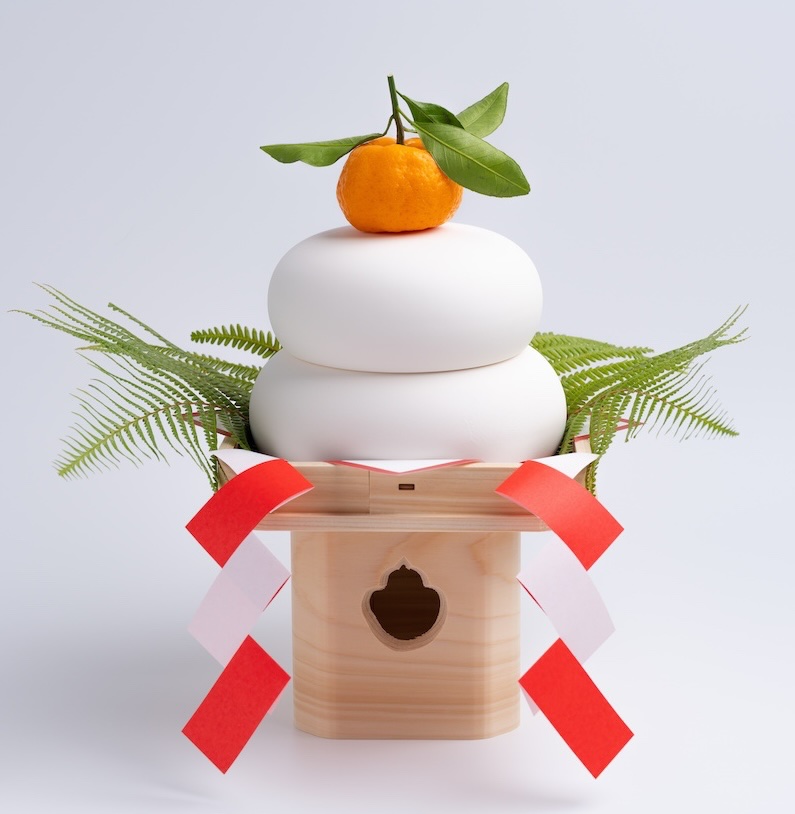
At New Years’ time, the Japanese decorate their homes with a special display called KAGAMI MOCHI. There are many regional variations on the theme but typically two large rounds of omochirice taffy are stacked with a daidai 橙 (bitter orange) on top. The arrangement is placed on a ritual display stand decorated with leaves and (auspicious) red-and-white paper. All the elements of the display have symbolic meaning, mostly expressed in homonyms. For example, daidai written as 代々 means “generation after generation” so that including the daidai bitter orange in the display alludes to enduring life and continuity.
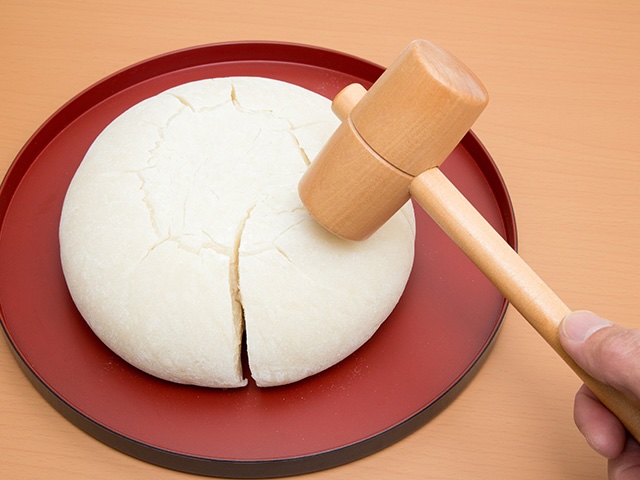
In most parts of Japan, kagami mochi is on display for several weeks, by which time the omochi rice cakes have dried out and begun to crack. KAGAMI-BIRAKI, the ritual smashing of the dried out omochi,is performed on January 11.
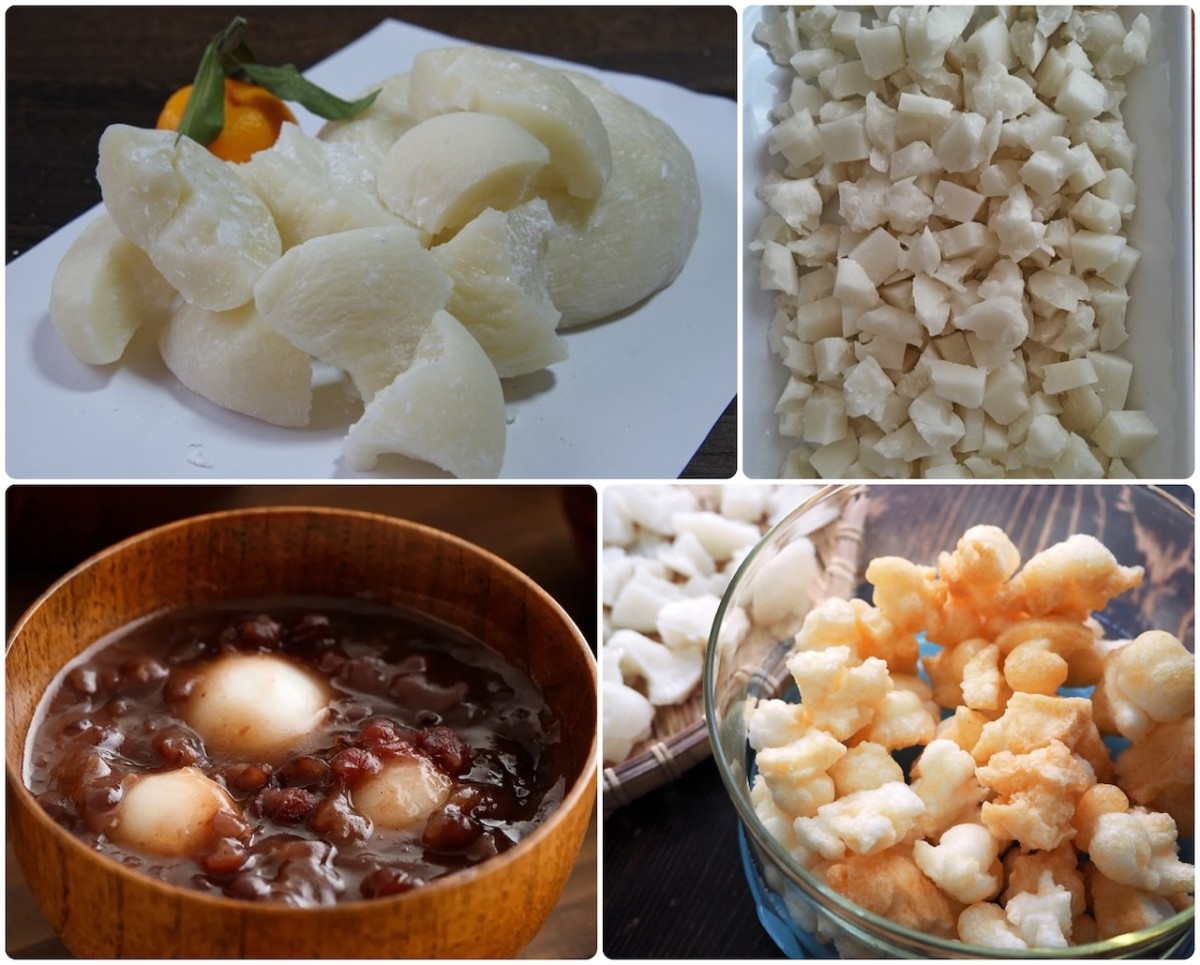
Both the mottainai 勿体無い approach to not wasting food and the practice of sharing food and drink with the dieties, known as naorai 直会, compel the Japanese to re-purpose the broken bits of omochi.
A Taste of Culture
I’m looking forward to resuming in-person programs this year. Requests from MARCH 2026 onward are being accepted.
A Taste of Culture offers custom workshops for visitors and residents who wish to learn about Japanese home-style cooking and prepare it for themselves. DETAILS here.
Regardless of where you reside, I hope you remain interested in Japan and its food culture.
For inspiration and instruction in preparing Japanese food for yourself and others, visit KITCHEN CULTURE. To explore and practice Japan’s washoku wisdom in your own kitchen, visit Kitchen PROJECTS.
Kagami Mochi & Otoshi-dama
The origins of today’s custom of giving otoshi-dama お年玉 money to children at New Years time has connections to kagami mochi. Again homonym word play helps to understand the association. In ancient times, the ritual display of omochi was referred to as toshi dama, written with the calligraphy for “year” 歳 and “spirit” 魂 .
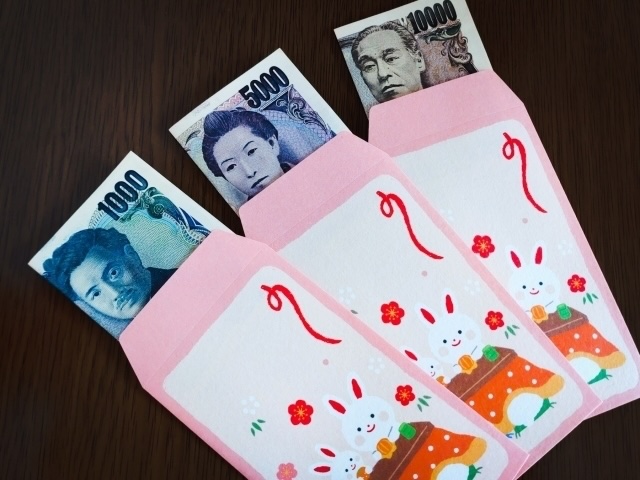
The shift from kagami omochi rice cakes as otoshi-dama to money came in the 17th century. Today, school-aged children (from kindergarten to college) are the recipients of otoshi-dama money.
Parents, grandparents, aunts and uncles and other relatives in addition to adult family friends are the ones who give the money. Sums range from ¥1000 to ¥10,000 (though ¥4,000 and ¥9,000 are avoided because of unlucky associations with the numbers 4 and 9), and the money is always offered folded in a pochi-bukuro envelope.
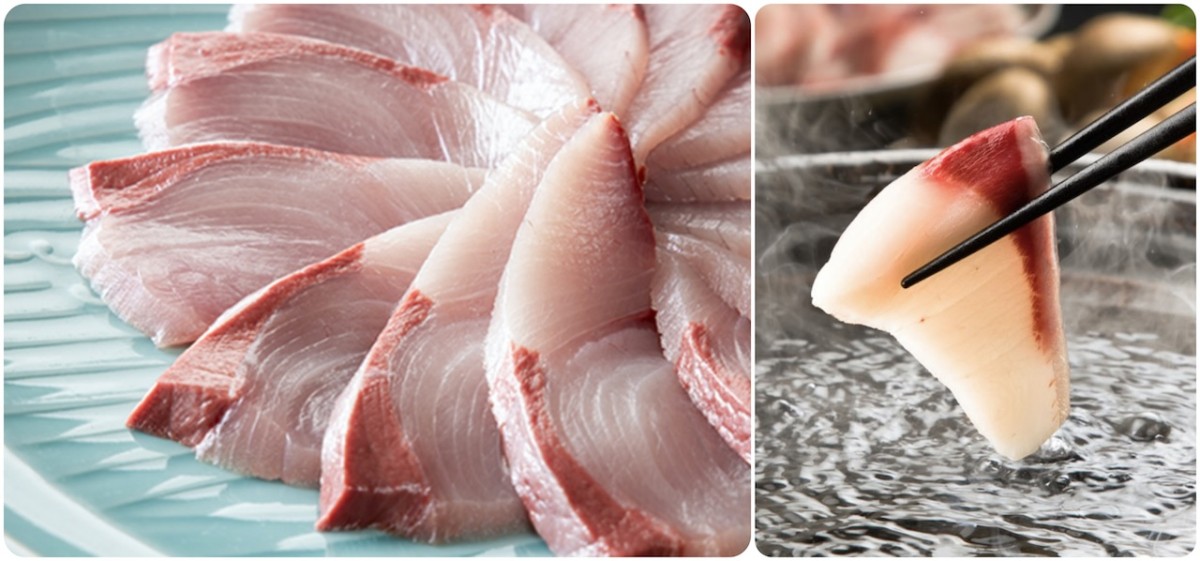
Buri Shabu Nabé / 鰤しゃぶ
Barely blanched slices of buri (yellowtail) are swished-through-a bubbling broth before being dipped in ponzu: buri shabu nabé,a wintertime delight!
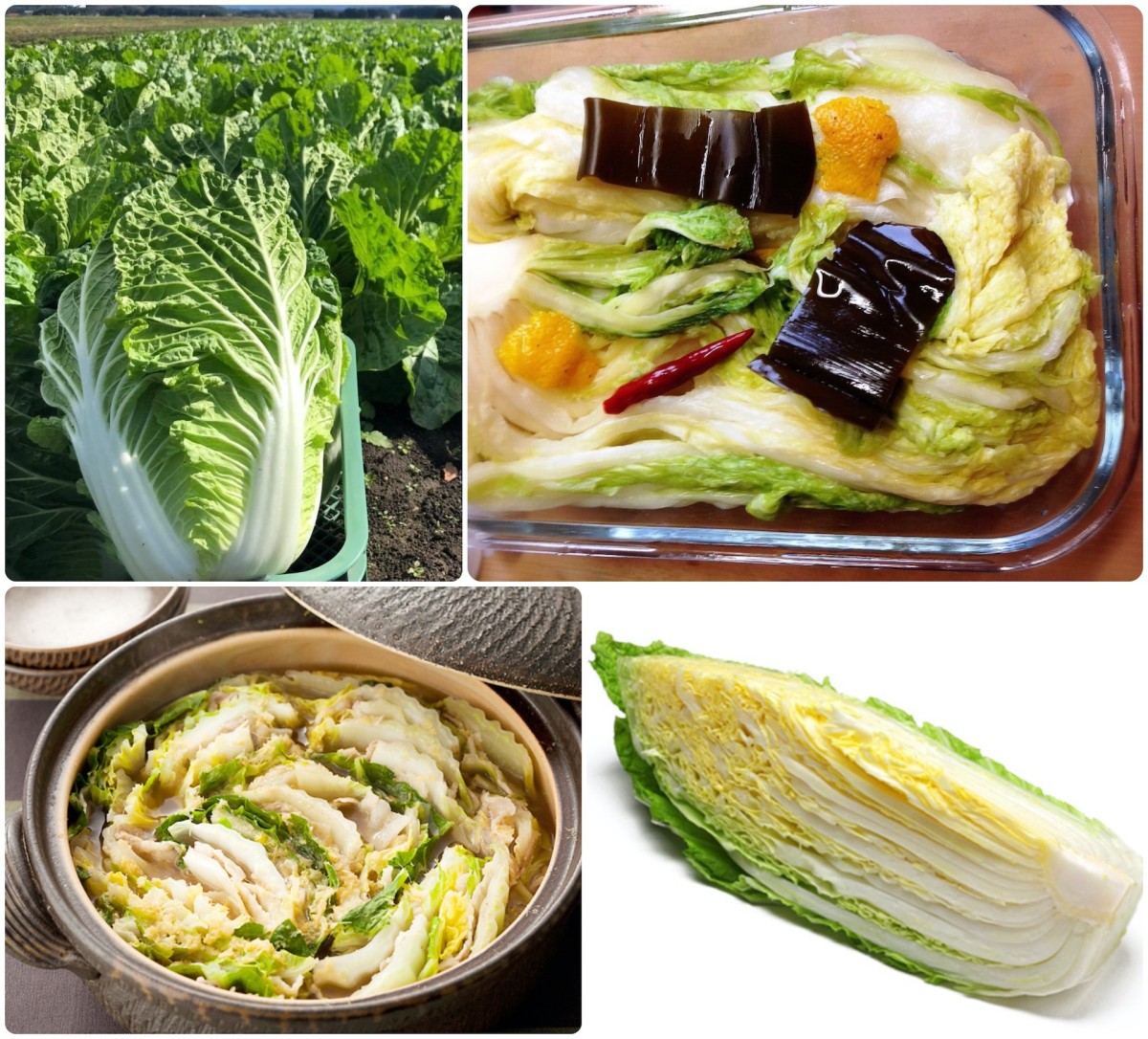
Hakusai 白菜
Versatile hakusai can be transformed into a spritely pickle to perk up a bowl of rice as easily as it can be made into a bubbling main course nabé to be shared with friends and family on a chilly evening.
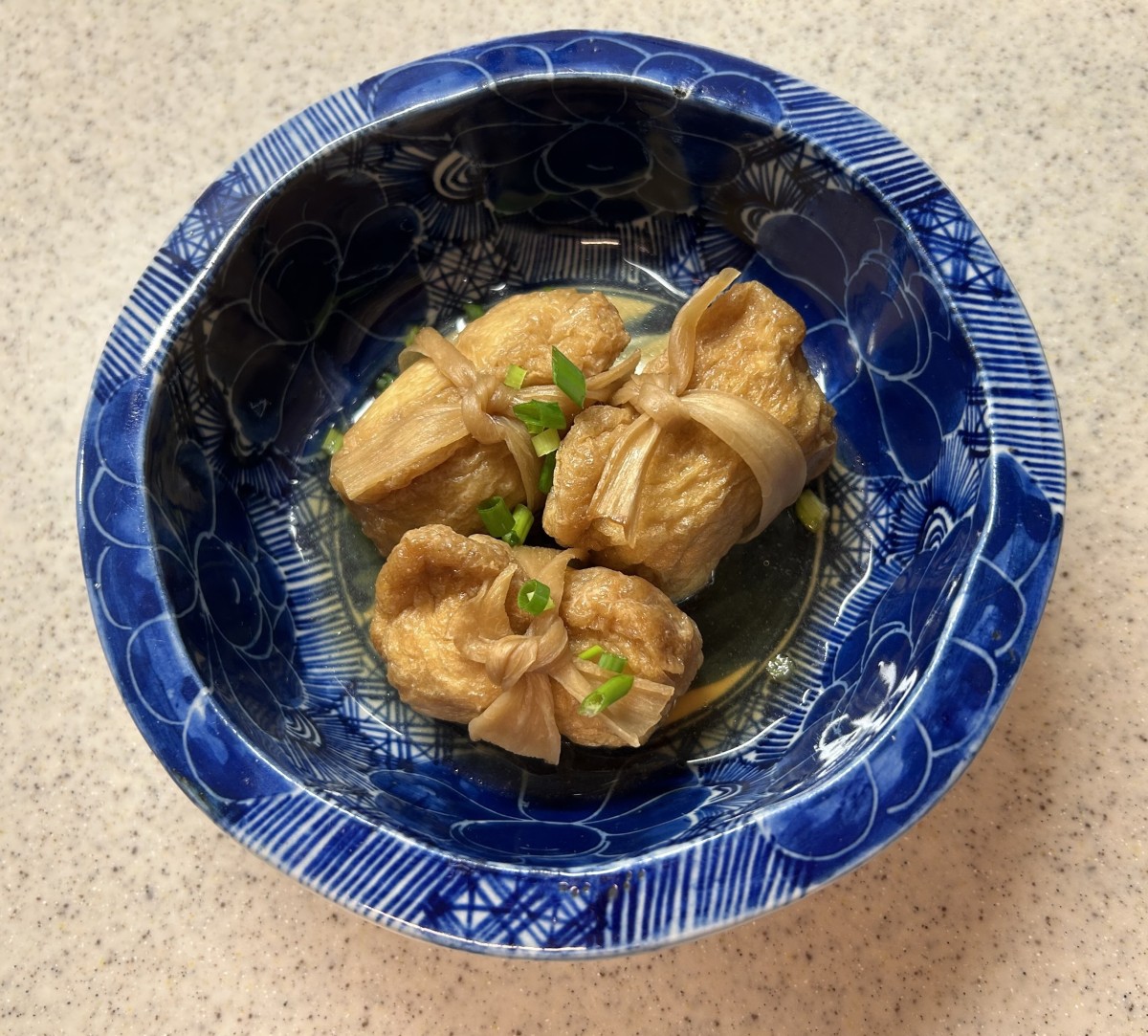
WASHOKU ESSENTIALS is a bi-monthly column in the Japan Times.
Most recently about age-fukubukuro, Good fortune, wrapped in fried tofu.
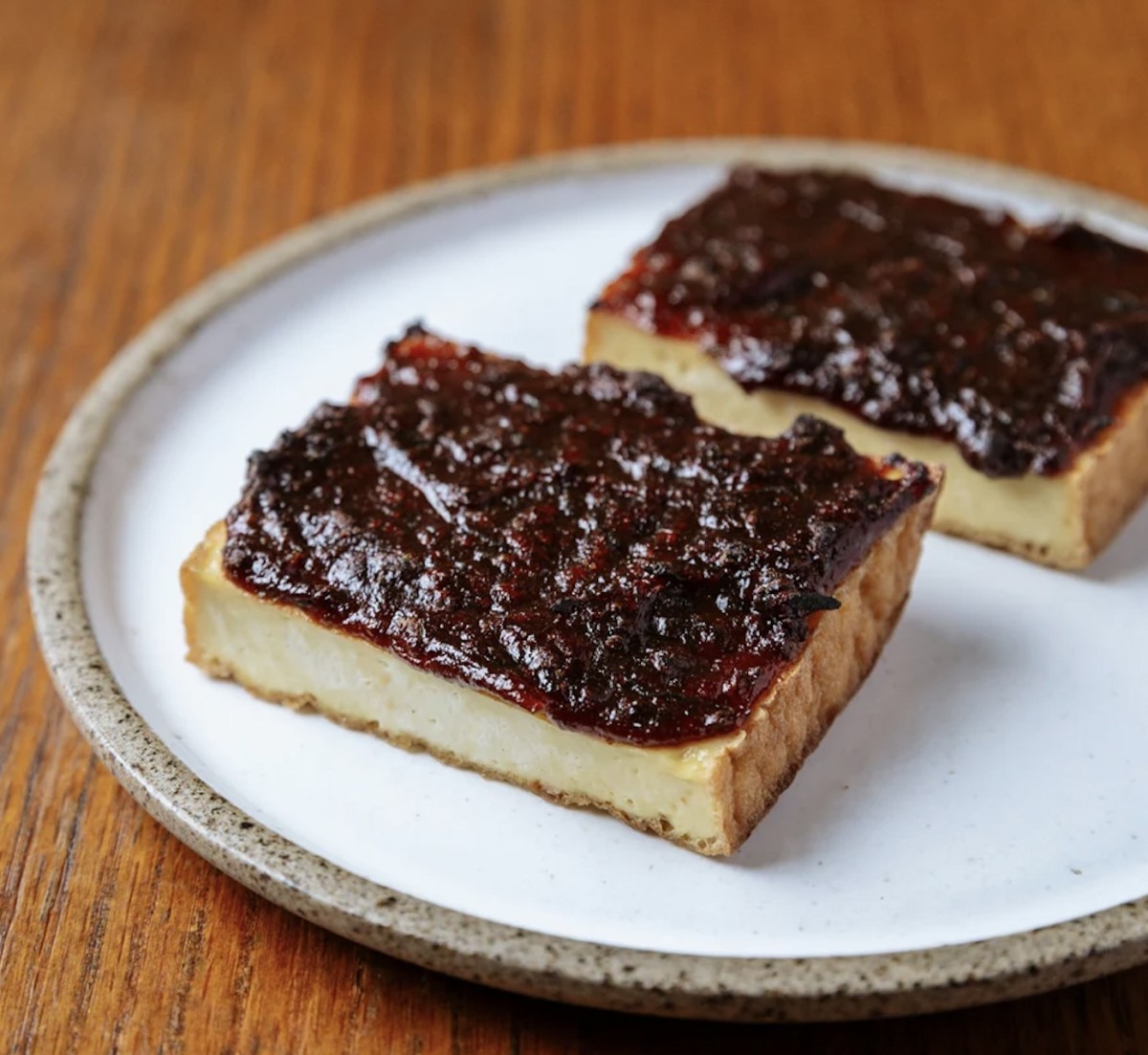
essays & recipes are posted to The Japanese Pantry, an online store dedicated to making quality artisanal Japanese ingredients available to cooks in the United States. My latest contribution, Part Three, is Miso-Slathered Broiled Tofu Enjoy!
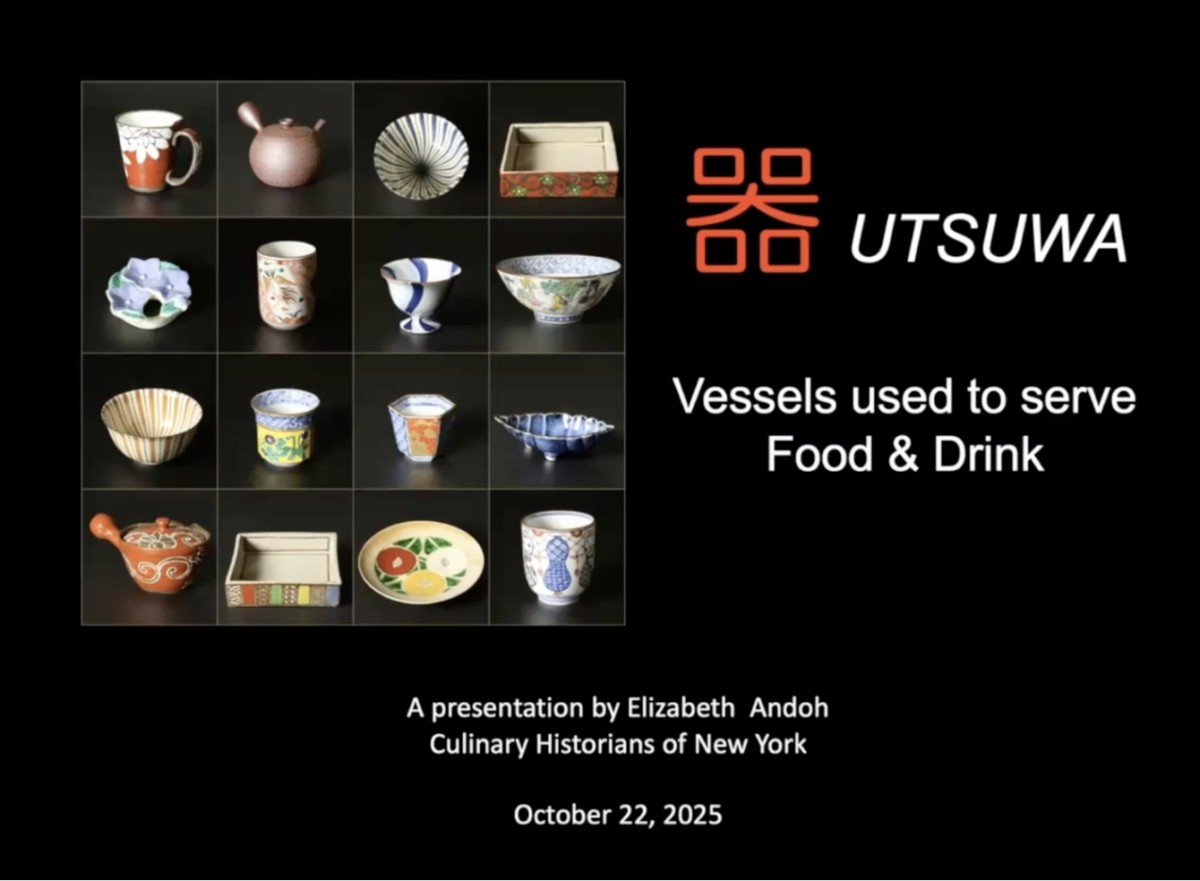
器 UTSUWA:
Vessels used to serve Food & Drink
Culinary Historians of New York hosted an online webinar with Elizabeth Andoh on October 22, 2025. To listen, and download printed materials related to the presentation, click on the image here

Episode 341 (Sept 10, 2024) is about the language used to describe food textures … mouthfeel is often the most challenging element when trying new foods.
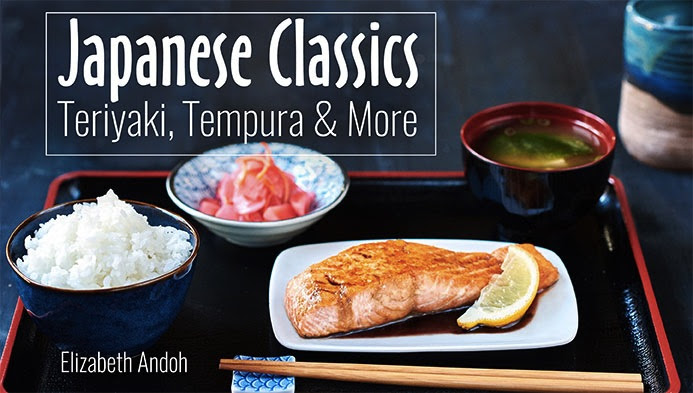
Prefer video-based learning? Join me on CRAFTSY
Comments