
Dear friends, colleagues and those who have expressed an interest in the FOOD & CULTURE of Japan:
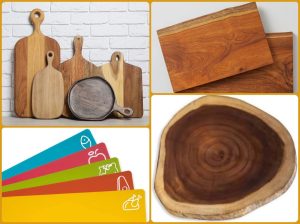
The unassuming cutting board – a dedicated surface on which to slice and chop food – is an ancient tool. Natural materials such as stone and wood offered smooth, stable surfaces on which to prepare food.
In the modern kitchen synthetic materials such as silicone and plastics have become increasingly popular. Practical, round and rectangular shapes tend to predominate, though there are novelty and decorative boards, too.
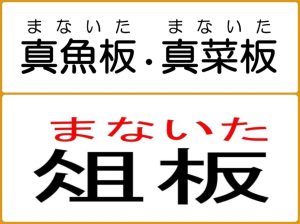
In Japanese, it is not uncommon to find more than one way of describing and writing an object, especially when the item in question has roots in Chinese culture. Indeed, many culinary tools and techniques used in Japan today can be traced to China.
In ancient China the calligraphy so 俎 was used to describe a board on which meat was cut, especially for ritual sharing. In Japan where the concept, and word manaita was already in use, one way of writing the word borrowed the Chinese calligraphy, adding to it the calligraphy for a plank ( ita ) of wood. 俎板
Just to make things more interesting (spell that confusing???), an alternate way of writing the word manaita uses calligraphy for “true” and “fish” (plus “board”) 真魚+板 or in some instances the calligraphy for leafy green instead of “fish” (plus “board”) 真菜+板
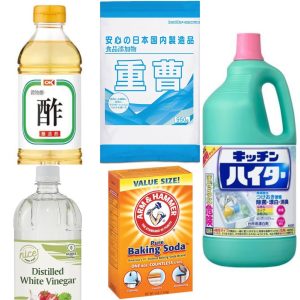
PROJECT Cutting Board considers a variety of factors in selecting a board, and the pros and cons of various materials, both natural and synthetic, used in making boards.
Tips on removing odors and stains from cutting boards are included.
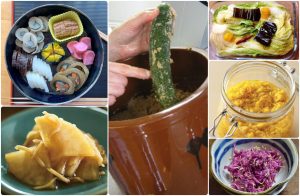
Two-Session TSUKEMONO WORKSHOP. Friday, November 13 (6:30-8:30 pm) + Saturday, November 14 (10:30 am – 4:00 pm). FULLY MATRICULATED
A Taste of Culture
A Taste of Culture offers custom workshops for visitors and residents who wish to learn about Japanese home-style cooking and prepare it for themselves. DETAILS here .
Regardless of where you reside, I hope you remain interested in Japan and its food culture.
For inspiration and instruction in preparing Japanese food for yourself and others, visit KITCHEN CULTURE .
To explore and practice Japan’s washoku wisdom in your own kitchen, visit Kitchen PROJECTS.
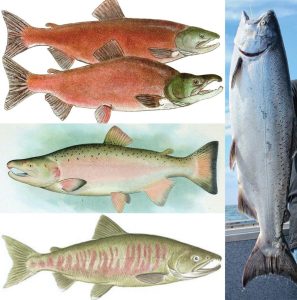
SALMON 鮭
All salmon are born in freshwater, migrate to the sea and then return to fresh water to spawn the next generation. In many species coloration and the shape of the mouth and nose change as the fish matures. A hooked nose is a characteristic of male salmon as they approach maturity.
To find out more about salmon and ways to prepare it click on the photo above.
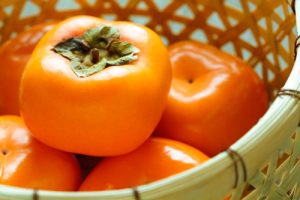
Persimmon Power 柿の力 Kaki no Chikara
“ Kaki ga akaku naru to isha ga aoku naru ” (as persimmons turn to orange, doctors turn green) is a Japanese saying similar to the American “an apple a day keeps the doctor away.” This adage attests to the powerhouse of nutrients found in ripe persimmon fruit including those with antibiotic and anti-inflammatory properties.
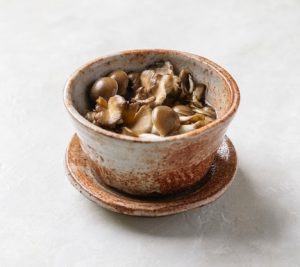
essays & recipes are posted to The Japanese Pantry, an online store dedicated to making quality artisanal Japanese ingredients available to cooks in the United States. My latest contribution, Part Four, is Harnessing the Power of Steam Enjoy!
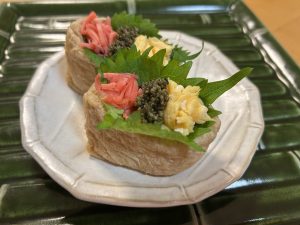
WASHOKU ESSENTIALS is a bi-monthly column in the Japan Times.
Most recently about open-faced inari-zushi.

器 UTSUWA:
Vessels used to serve Food & Drink
Culinary Historians of New York hosted an online webinar with Elizabeth Andoh on October 22, 2025. To listen, and download printed materials related to the presentation, click on the image here
Episode 341 (Sept 10, 2024) is about the language used to describe food textures … mouthfeel is often the most challenging element when trying new foods.
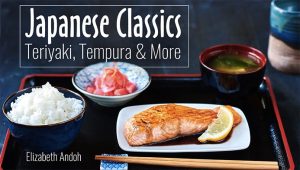
Prefer video-based learning? Join me on CRAFTSY
Comments